The “zero-power” reactor
A low-power research reactor used for reactor-physics studies. Despite its number, R0 came after R1. It is also distinct from the later R2-0 reactor.
Read more ↗MARVIKEN · SWEDEN
A Swedish landmark in reactor safety research
Built as a nuclear power plant, Marviken never entered nuclear operation. Instead, its unused reactor became a remarkable setting for international research.
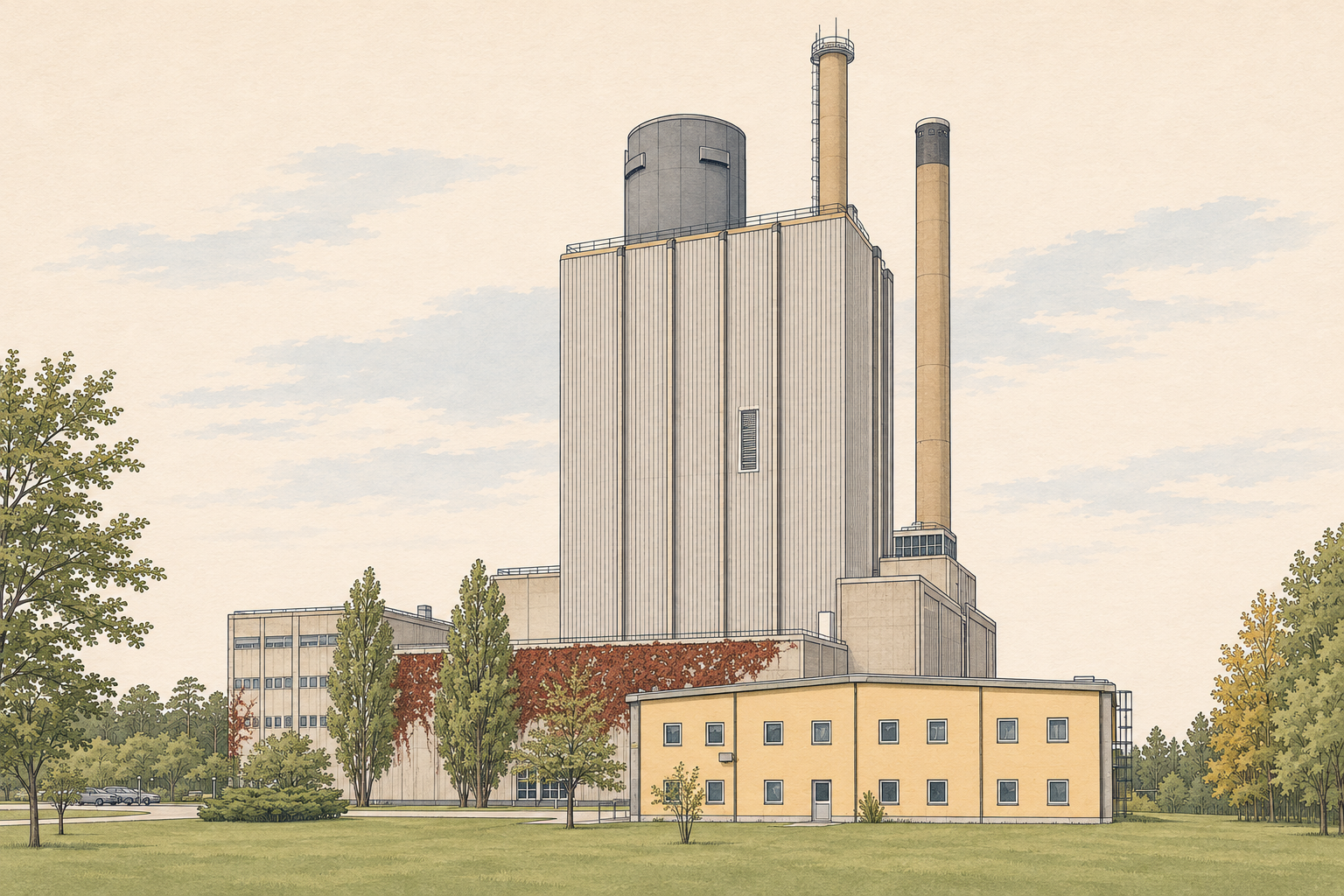
The Marviken nuclear power plant, near Norrköping in Sweden, was built as part of Sweden’s early nuclear energy programme. Its reactor was never loaded with nuclear fuel, and the nuclear project was discontinued in 1970.
The site nevertheless made an important contribution to the nuclear industry. Beginning in 1972 and continuing through the late 1970s, Marviken hosted multinational, full-scale reactor safety experiments. Researchers studied containment behaviour and the flow of water and steam under simulated accident conditions.
Further experimental programmes continued into the 1980s. The facility provided a rare opportunity to study these phenomena at full scale, producing data used to assess and improve reactor safety.
ENGINEERING / THE IAEA ARCHIVE
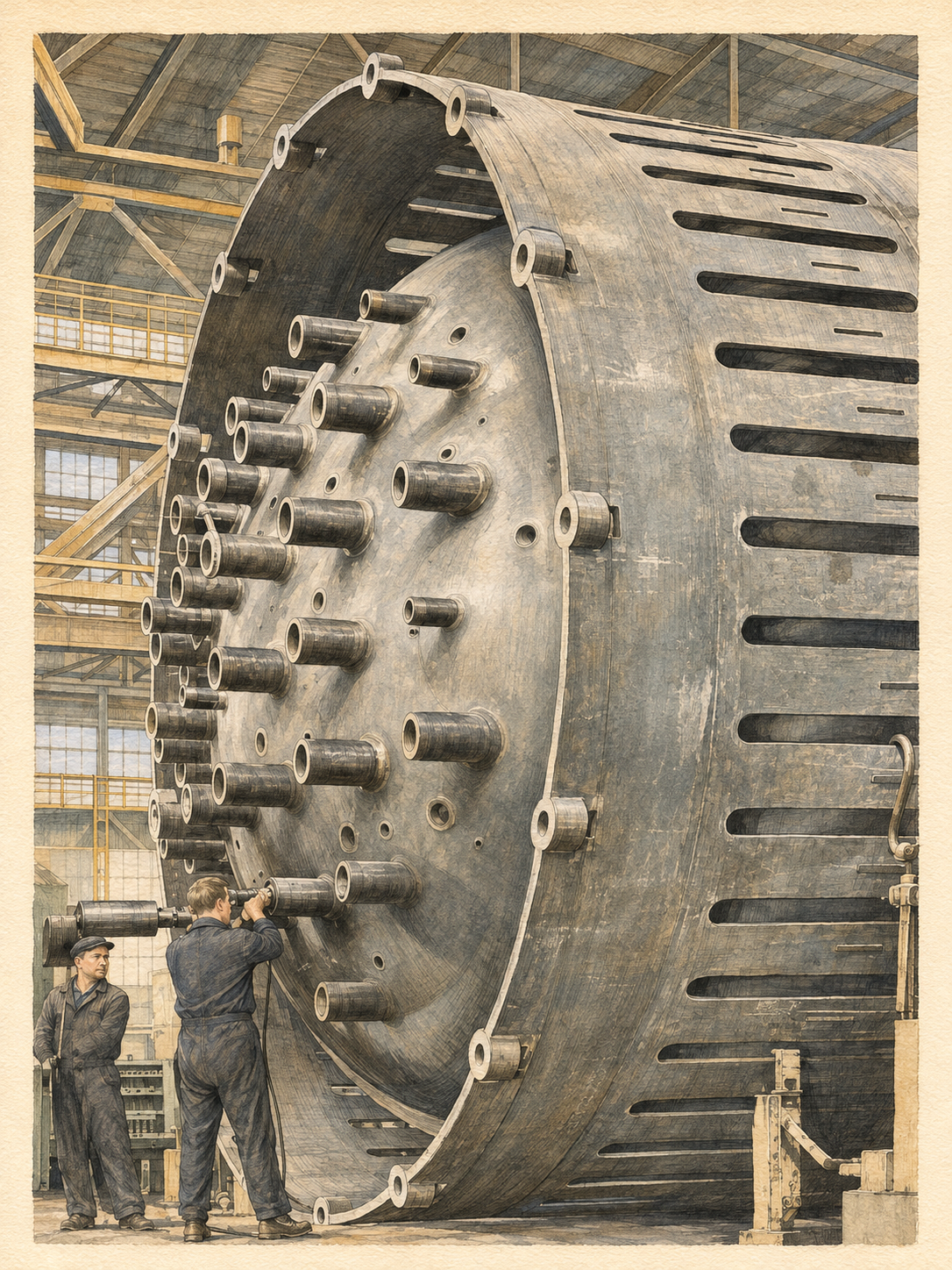
The IAEA’s contemporary account captures the scale of Marviken’s engineering ambition. Its photograph shows workers checking the drilling of 76 pipe connections in the vessel’s bottom flanged end.
The vessel comprised 8- and 15-metre sections, with 76 mm molybdenum-alloy steel walls and a 5 mm stainless-steel lining. AB Atomenergi designed a special flange joint. Delivery was planned for mid-1966. The proposed boiling-heavy-water plant was rated at 140 MWe, potentially 200 MWe with internal nuclear superheat. These were design plans: the reactor was never fuelled.
01 / A FASCINATING ITINERARY
A fascinating itinerary through Swedish industrial history: a train journey, a drive along the Bråviken coast, a ferry crossing and a walk in the landscape surrounding Marviken.
Take an early train from Stockholm to Nyköping and begin a day exploring the coast south of the capital.
Collect a rental car in Nyköping and drive towards Bråviken, where forest, farmland and coastal villages frame the journey.
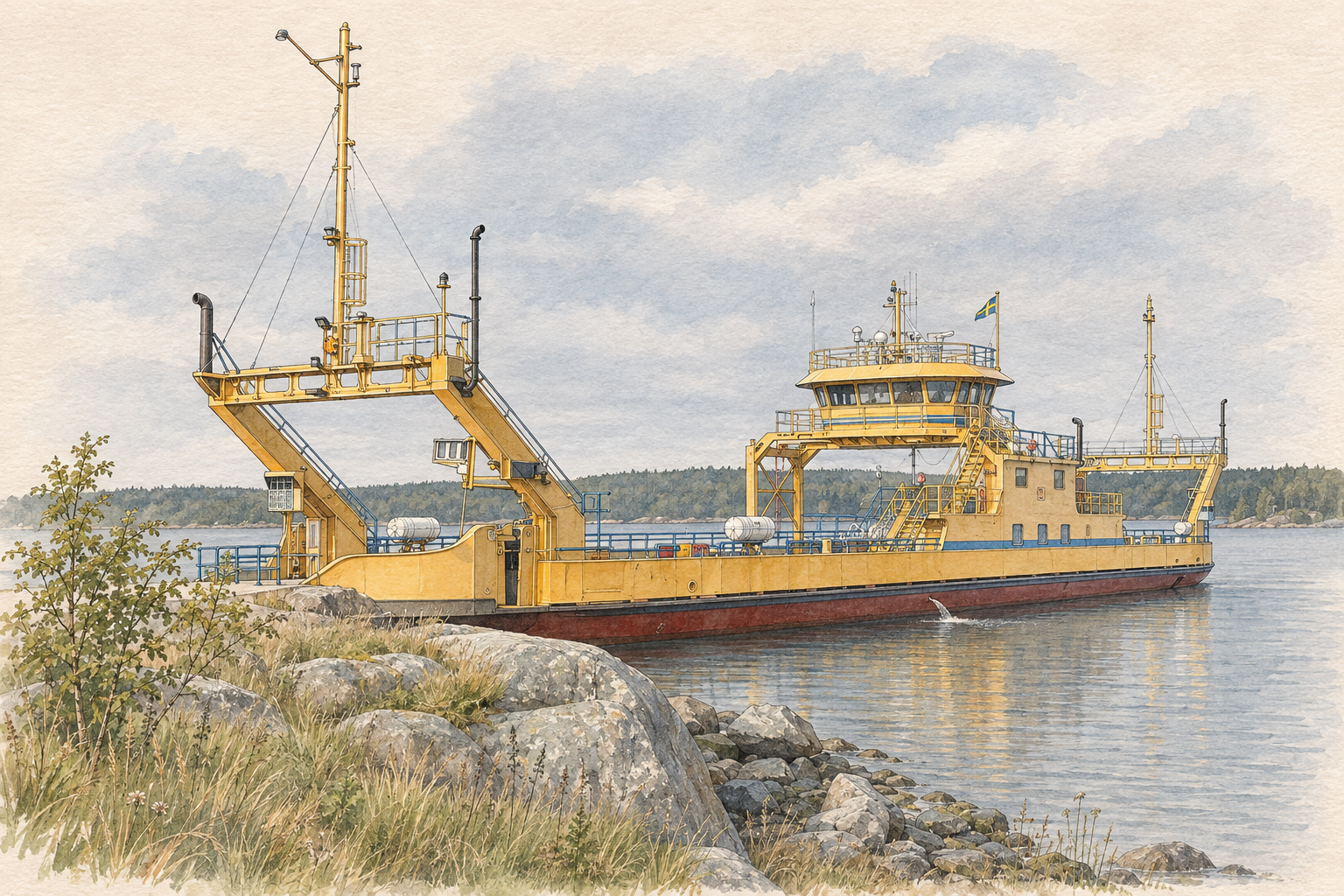
Cross Bråviken on the Skenäsleden ferry between Säter and Skenäs, then continue across Vikbolandet towards Marviken.
Explore the surrounding landscape, enjoy a picnic with a view of the power plant and make a stop at the small fishing village of Granvik on the return journey.
The plant is currently closed to the public. Respect signs and fences.
Skenäsleden ferry information ↗02 / Marviken on film
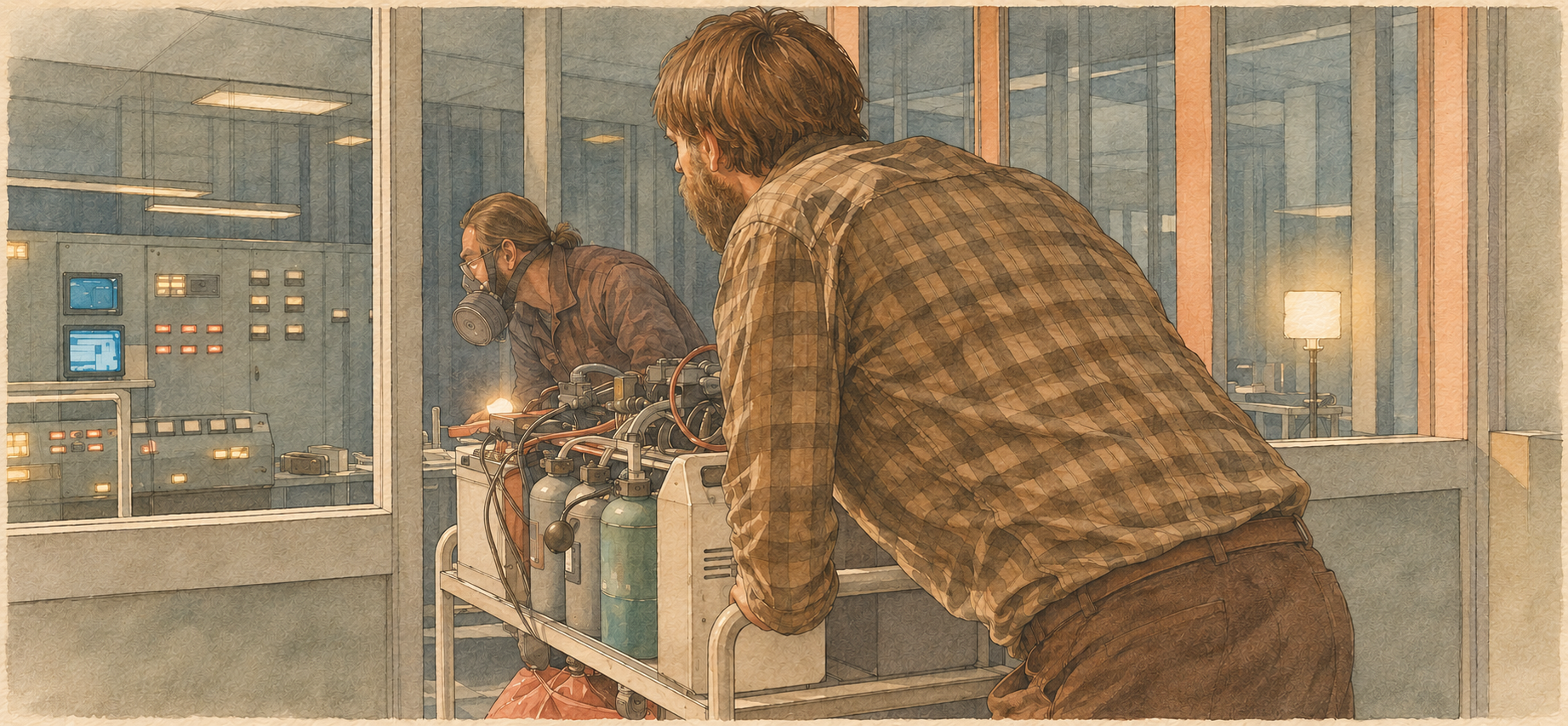
Marviken’s industrial setting also appears in cinema. The site was a filming location for Den blomstertid nu kommer, released internationally as The Unthinkable—a Swedish thriller imagining a country under a mysterious attack.
The Norrköping-based film collective creates films collaboratively, from the initial idea to the finished production. Den blomstertid nu kommer was its first feature, followed by UFO Sweden in 2022.
03 / HISTORICAL CONTEXT · 1945–1972
After the Second World War, Sweden investigated the possibility of acquiring nuclear weapons. FOA, the Swedish National Defence Research Institute, studied the technical and strategic questions while the country debated defence, cost and nuclear policy.
At the same time, the civilian “Swedish line” pursued domestic uranium and heavy-water reactors. Civilian and military research had connections, but their histories should not be collapsed into a claim that every Swedish reactor was a weapons facility.
In 1968 Sweden decided against acquiring nuclear weapons and signed the Nuclear Non-Proliferation Treaty; ratification followed in 1970. Weapons-design work was phased out, with FOA’s experimental plutonium work ending in 1972. Sweden did not develop an operational nuclear arsenal.
Marviken belongs in this wider story of technological ambition and changing policy. Because its reactor was never fuelled, it did not produce plutonium.
04 / EARLY SWEDISH REACTORS
Research reactors, demonstration plants and ambitious prototypes: these were distinct projects, not a simple sequence of nuclear power stations.
A low-power research reactor used for reactor-physics studies. Despite its number, R0 came after R1. It is also distinct from the later R2-0 reactor.
Read more ↗Located in a rock cavern beneath KTH, R1 was a research reactor. Its first start in July 1954 marked the beginning of reactor operation in Sweden; the former reactor hall remains part of KTH’s history.
Read more ↗R2 supported nuclear research and materials testing at Studsvik. It operated alongside the separate R2-0 reactor; both ceased operation in June 2005. R2 was a research facility, not a commercial power station.
Read more ↗Vattenfall’s Adam project and AB Atomenergi’s R3 plans were brought together at Ågesta as R3/Adam. The Eva and R4 plans became Marviken, R4/Eva. These names describe the development of the projects, rather than additional operating reactors.
Read more ↗Ågesta was a heavy-water demonstration plant supplying heat to Farsta and also generating electricity. Its reactor first started in 1963, with regular energy supply from 1964 until closure in 1974. Unlike Marviken, it entered nuclear operation.
Read more ↗Marviken was intended to be R4, the next step after Ågesta/R3 in the Swedish reactor programme. Known as R4/Eva, it was built as an ambitious heavy-water prototype but was never loaded with nuclear fuel. Its full-scale systems later served international reactor safety research.
Ågesta / R3 →05 / URSVIK
In the woodland north of Stockholm, Ursvik preserves another chapter of Sweden’s nuclear history. The former FOA research area housed laboratories connected with the country’s nuclear-weapons research, including a plutonium laboratory.
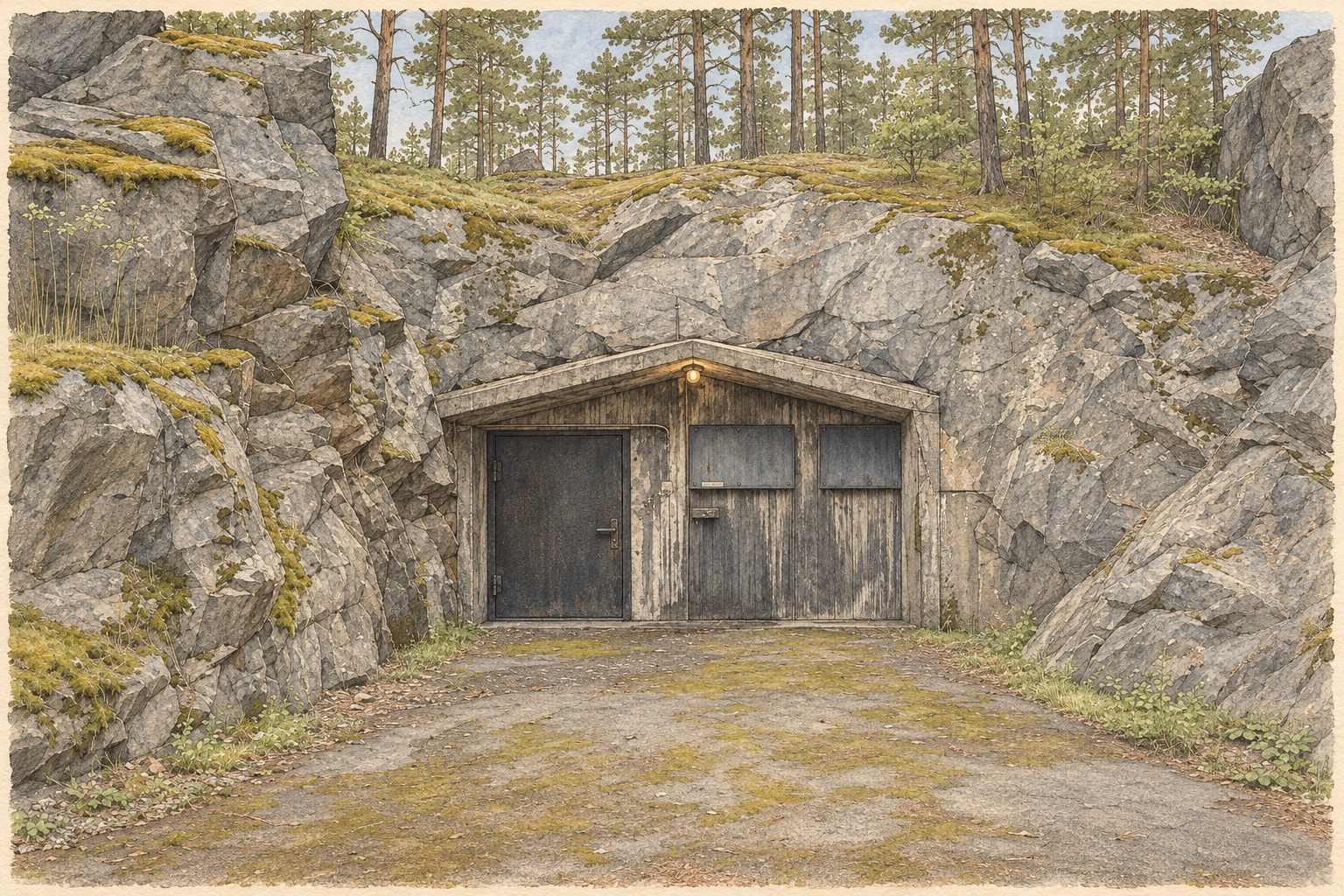
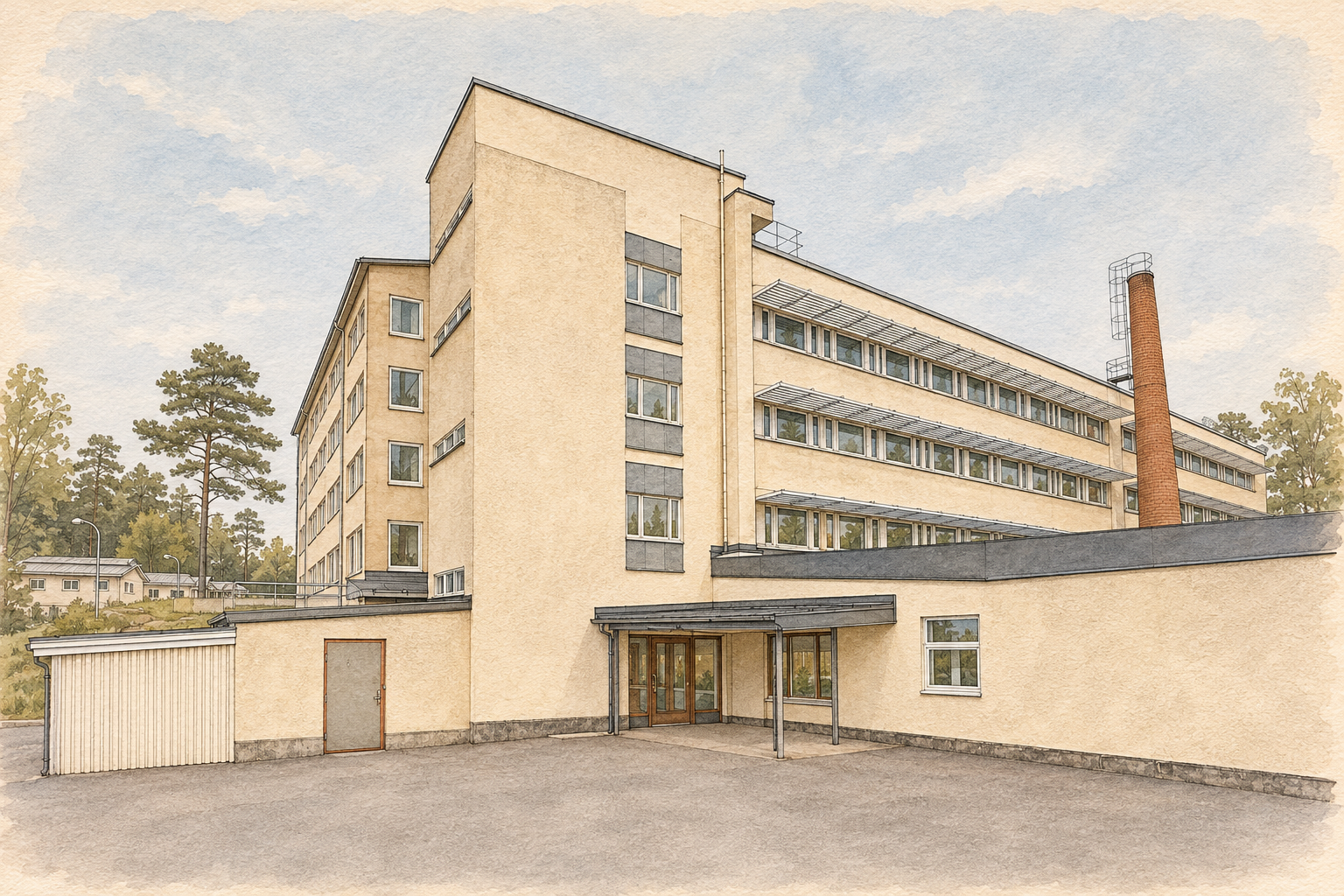
The plutonium work at Ursvik belonged to the same era as the heavy-water reactor programme at Ågesta and the planned Marviken/R4. The laboratory handled plutonium for research while Sweden explored the nuclear option.
The plutonium laboratory’s experimental work ended in 1972 as the weapons programme was wound down. Laboratory equipment and radioactive waste were removed, followed by environmental investigations and remediation as the former military landscape changed.
SSM: FOA in Ursvik, section 6 ↗These places reveal different parts of the Swedish nuclear story: Ågesta was a working reactor, Ursvik a centre for defence research, and Marviken an unfuelled prototype that became a safety laboratory.
Following their connections offers a wider view of the ambitions, scientific work and decisions that shaped Sweden’s nuclear programme.
06 / KRUTBANAN
Krutbanan—the “gunpowder railway”—was a military railway linking Ulriksdal with the defence facilities at Ursvik. Built during the Second World War, the roughly three-kilometre line carried military supplies, including weapons and ammunition.
Parts of the former railway alignment now form paths through the Järva landscape. The old embankment provides a tangible link to Ursvik’s military past and a natural companion to exploring the history of the bunker.
Together with Ågesta, Ursvik and Krutbanan form a fascinating route through the Stockholm region’s defence and nuclear heritage.
Krutbanan and the Ursvik landscape ↗07 / FIELDWORK & RECORDS
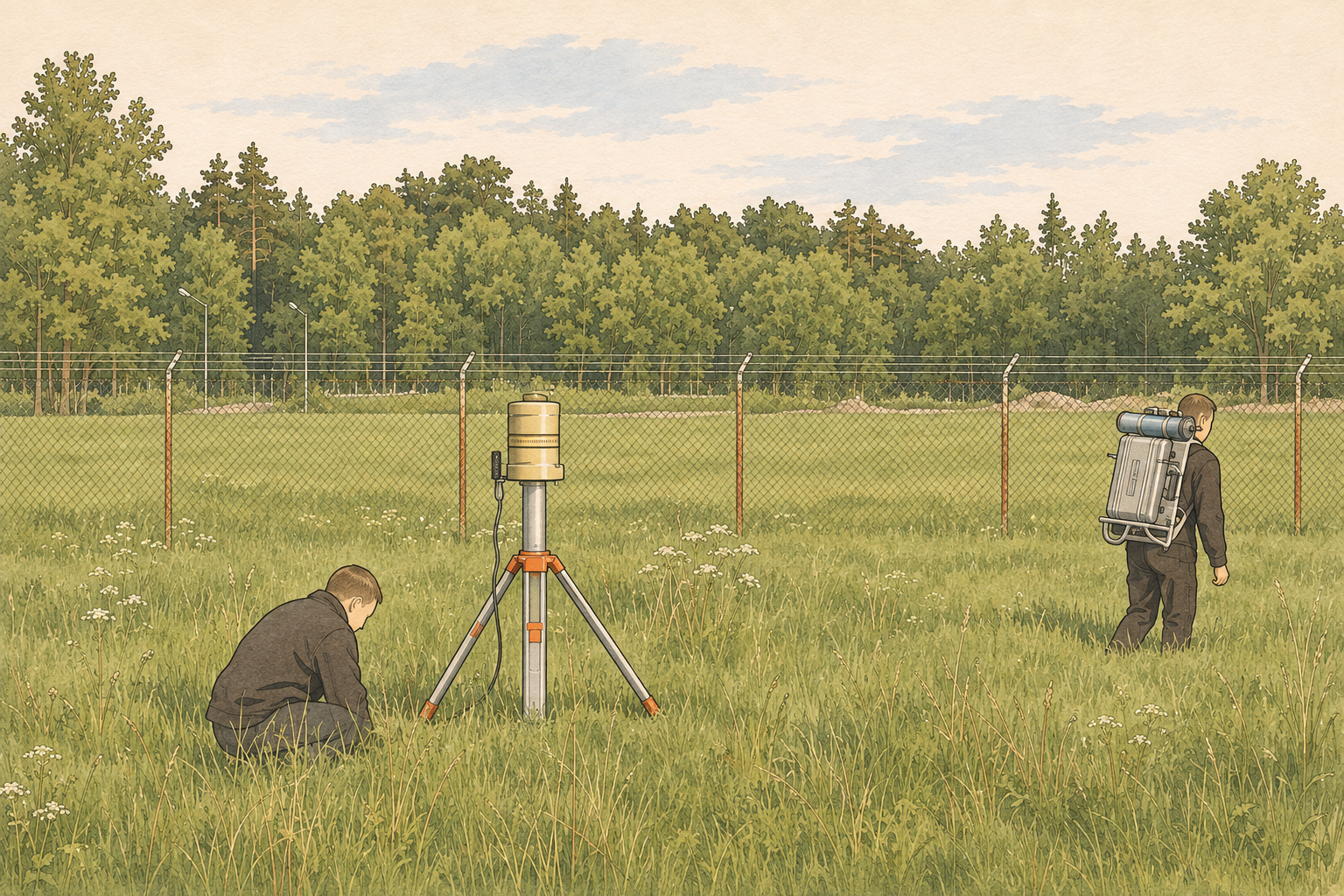
FOI surveyed the former Ursvik industrial area in 2003; the results were published in 2004. Historical records and interviews guided gamma measurements and soil sampling. Field instruments included germanium and sodium-iodide detectors, and Studsvik Nuclear analysed samples for alpha-, beta- and gamma-emitting substances.
The investigation found no indication of elevated radioactive material attributable to the former activities. Measured activity was explained by natural radioactivity and residual fallout from Chernobyl.
FOI-R--1187--SE ↗SSM’s 2013 report on former radioactive-material sites brought together the Ursvik investigations, remediation records and regulatory history. It records FOI’s radiological clearance and the end of its activities at Ursvik, as well as later land investigations and removal of chemical contamination and suspect explosive objects.
The report provides the wider record of how the former laboratory area was investigated and decommissioned.
SSM 2013:23 · section 6 ↗08 / STUDSVIK & DEEP TIME
It might sound like a location from a James Bond film, but Atomic Beach is a real stretch of the Södermanland coast. Officially Byggningssand, its nickname comes from neighbouring Studsvik. An ancient impact crater adds another extraordinary layer to the setting.
Studsvik became a centre for Sweden’s pioneering nuclear research. Its research reactors included R0 and R2; R2 and the separate R2-0 operated from 1960 until 2005. The nearby beach brings this technical history into an otherwise peaceful landscape of sea, rock and woodland.
Byggningssand / Atomic Beach ↗Nearby Tvären Bay contains an impact structure about 450 million years old. Long before the research reactors, a meteorite struck this part of the ancient seafloor. Sedimentary rocks associated with the crater preserve evidence of the marine life that followed.
A 2025 study examines fossil bryozoans in glacially transported limestone blocks from the Tvären region—linking the crater’s geological history with fossils found around the bay.
Read the palaeontology paper ↗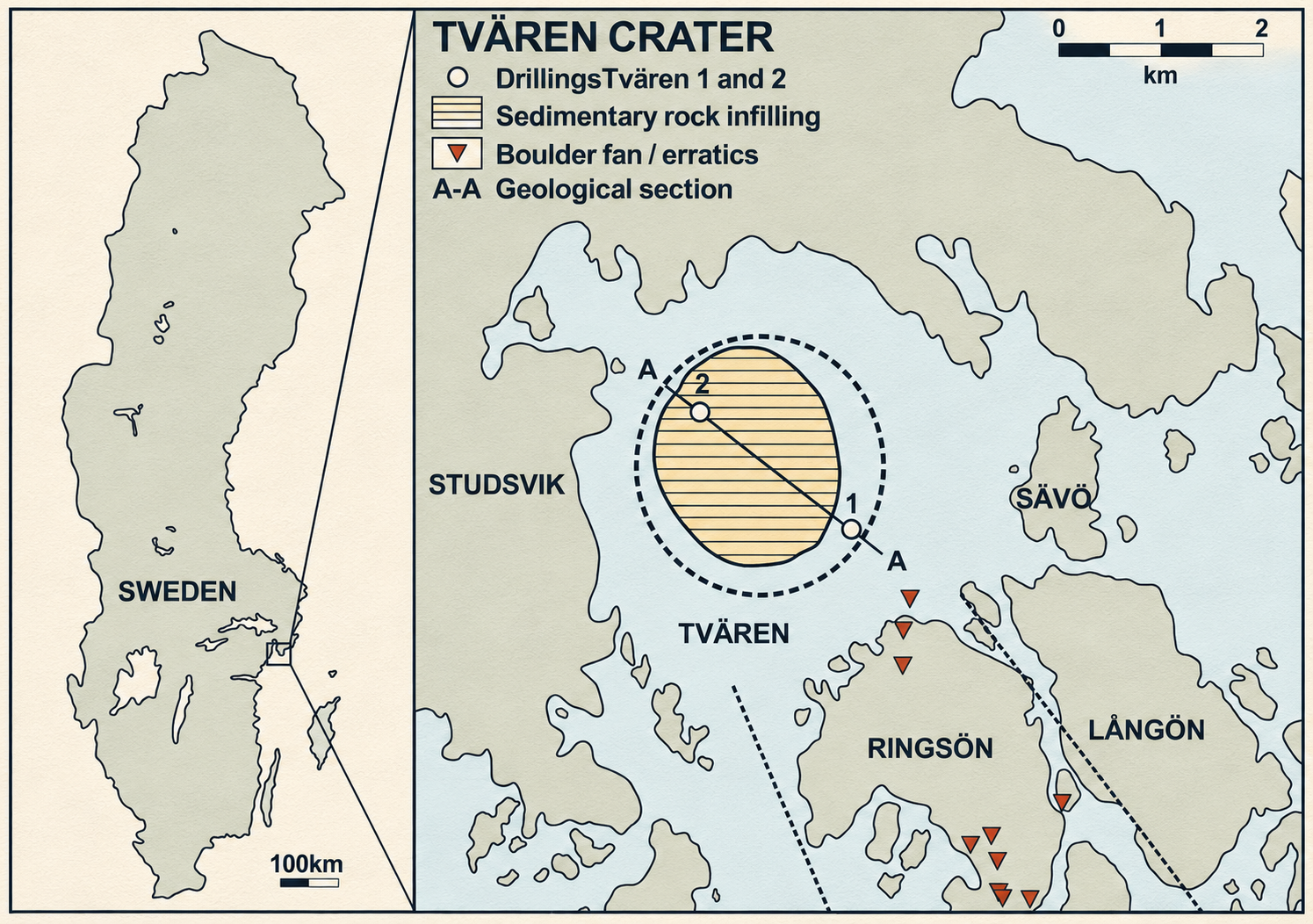
09 / FICTIONAL ECHOES
In the 1995 anime Neon Genesis Evangelion, Adam and the Evangelion units—usually called Evas—belong to a world of immense technological ambition and hidden origins. The names offer a striking echo of Sweden’s R3/Adam at Ågesta and R4/Eva at Marviken.
Evangelion builds its mythology around the ancient First Impact and the catastrophic Second Impact, an event connected to an experiment involving Adam. At Tvären, the impact is geological rather than fictional: a meteorite’s mark preserved beneath a Swedish bay.
Read together, the crater and the reactor names create an evocative parallel with the anime’s themes of origins, catastrophe and scientific ambition—a cultural association rather than a claim that the series was inspired by these Swedish sites.
Neon Genesis Evangelion ↗10 / AN IMAGINED SWEDEN
Simon Stålenhag places extraordinary machines in familiar Swedish landscapes: forests, fields, suburban roads and the remnants of large technological projects. His imagined Sweden is nostalgic, uncanny and often dystopian.
The deserted scale of Marviken, its concrete structures and the surrounding woodland feel remarkably close to the Sweden of Stålenhag’s pictures. The resemblance lies in the atmosphere: an ambitious technological future that has become a quiet relic in an ordinary landscape.
The optimism and infrastructure of the Ågesta and Marviken era provide a real historical counterpart to this visual world, even though Tales from the Loop and Things from the Flood imagine an alternative Sweden of the 1980s and 1990s.
Tales from the Loop and Things from the Flood are among Stålenhag’s narrative art books. His paintings inspired the 2020 television series Tales from the Loop, which follows people living above a mysterious research installation.